LAKE NAIVASHA
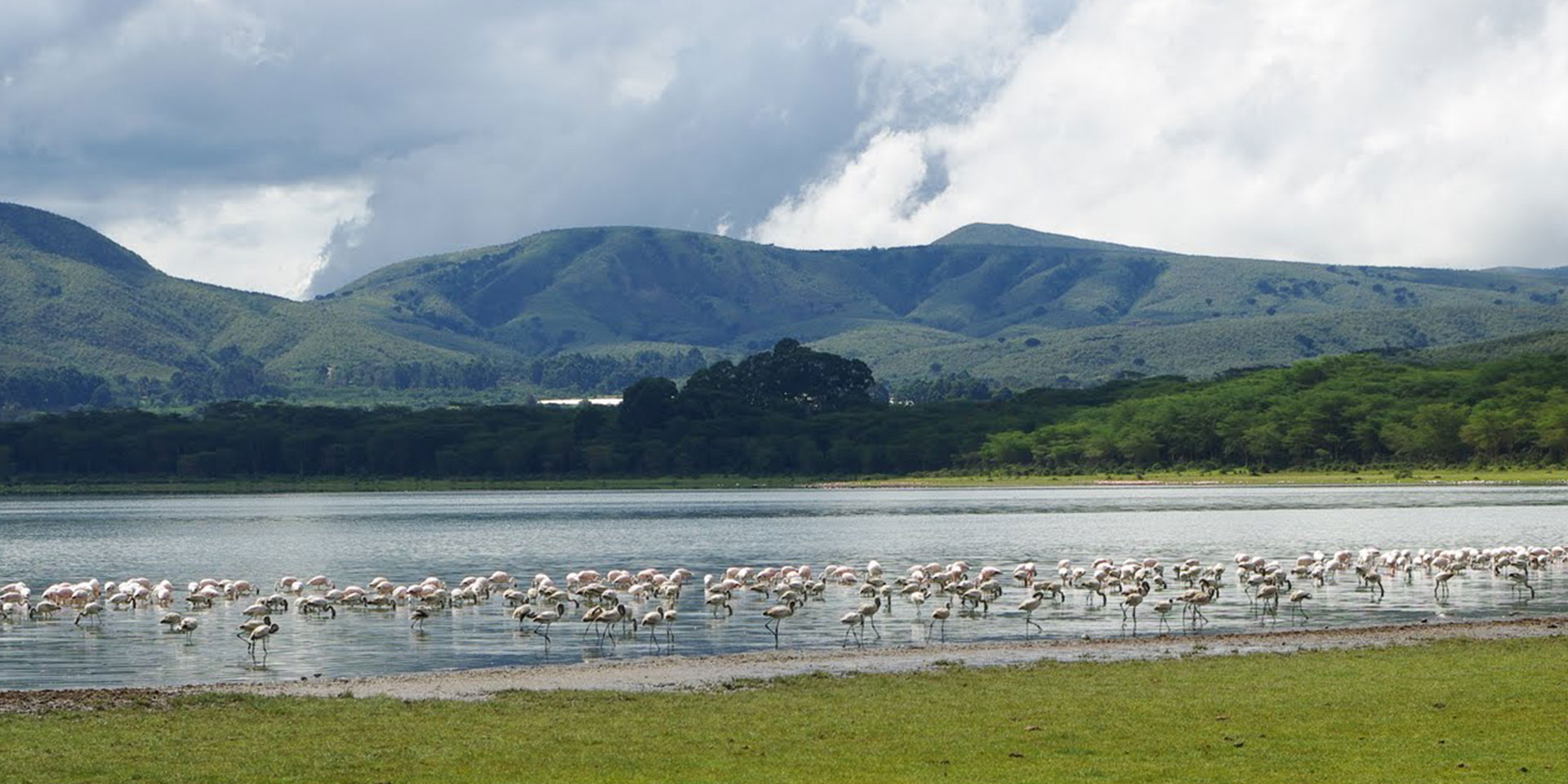
Lake Naivasha is a freshwater lake in Kenya, outside the town of Naivasha in Nakuru county, which lies north west of Nairobi. It is part of the Great Rift. The name derives from the local Maasai name Nai'posha, meaning "rough water" because of the sudden storms which can arise. Lake Naivasha is a beautiful freshwater lake, fringed by thick papyrus. The lake is almost 13kms across, but its waters are shallow with an average depth of five metres. Lake area varies greatly according to rainfall, with an average range between 114 and 991 sq. kms. At the beginning of the 20th Century, Naivasha completely dried up and effectively disappeared. The resulting open land was farmed, until heavy rains a few years later caused the lake to return to existence, swallowing up the newly established estates. The lake and its surroundings are rich in natural bounty, and the fertile soils and water supply have made this one of Kenya’s prime agricultural regions. Much of the lake is surrounded by forests of the yellow barked Acacia Xanthophlea, known as the yellow fever tree. These forests abound with bird life, and Naivasha is known as an excellent birding destination. The waters of the lake draw a great range of game to these shores. Giraffes wander among the acacia, Buffalo wallow in the swamps and Colobus monkeys call from the treetops while the Lakes large hippo population sleep the day out in the shallows. The region surrounding the Lake is well worth exploring. There are two more smaller lakes nearby, Oloidien, and Sonachi, a bright green crater lake.
ABERDARE NATIONAL PARK
The Aberdare National Park is home to elephants, black rhinos, leopards, spotted hyenas, olive baboons, black and white colobus monkeys, buffalos, warthogs and bushbucks among others. Rare sightings include those of the Giant Forest hog, bongo, golden cat, serval cat, African wild cat, African civet cat and the blue duiker. Covering an area of 766 square kilometers, Kenya’s Aberdare National Park lays right in the heart of the country. It sits in the Central Highlands region, south west of the majestic Mount Kenya. The park is part of the Aberdare Mountain Range and is a real myriad of landscapes, with peaks that reach 10,000 feet above sea level and tower over the forests, ravines, rivers, waterfalls and moorlands that lay below.
The Park is home to a wide variety of wildlife. You can catch a glimpse of the Big Five, as well as jackals, elands and baboons, to name a few. The park has an exceptionally large population of endangered black rhinos and the deep rivers provide an idyllic spot for trout fishing. Over 250 species of birds have made their home here and this is a prime pick for those who wish to catch a glimpse of the endangered Aberdare Cisticola.
MOUNT KENYA NATIONAL PARK & RESERVE
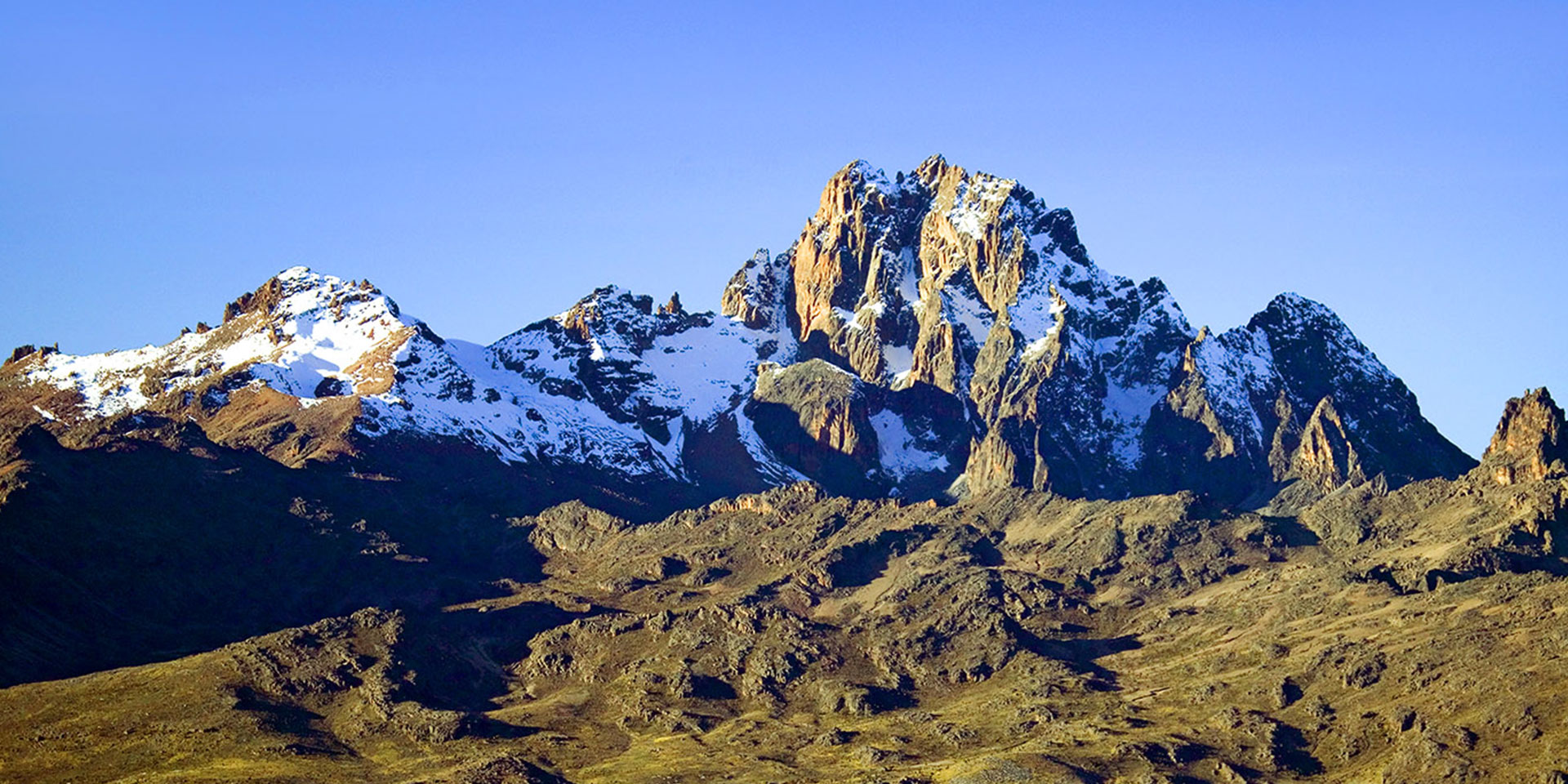
Mount Kenya National Park has an area of 715 square kilometers (276 sq. mi), most of which is above the 3,000 meters (9,800 ft.) contour line. The forest reserve has an area of 705 square kilometers (272 sq. mi). Combined this makes the area of the UNESCO World Heritage Site 1,420 square kilometers (548 sq. mi). A small portion of this park’s borders near heavy populations has electrified fences to keep the elephants out of the surrounding farmland. Volcanic sediment in the surrounding region’s soil and the huge volume of fresh water coming down the slopes makes the area particularly favorable for agriculture. At lower altitudes, Colobus and other monkeys and Cape buffalo are prevalent.
LAKE BARINGO
Lake Baringo is one of only 2 freshwater lakes in the Great Rift Valley in Kenya. Very little of the tourist traffic from Naivasha and Nakuru makes it as far as Baringo, keeping the experience peaceful. It is known for spectacular birdlife.
Lake Baringo is one of a number of lakes that form part of the East African Rift system. The Tugen Hills, an uplifted fault of volcanic and metamorphic rocks, lies west of the lake, while the Laikipia Escarpment lies to the east. It is one of the two fresh-water lakes in the Rift Valley (the other being Lake Naivasha). It lies off the beaten track in a hot and dusty setting, and is one of the northern-most lakes in the valley. The real joy of Baringo is how little of the tourist traffic from Naivasha and Nakuru makes it up this far. Time spent boating and walking around the lake is heavenly, whilst the hot springs and flamingos of Lake Bogoria are only a short drive away.
Over 470 species of birds have been recorded there, occasionally including migrating flamingos. A Goliath heronry used to be located on a rocky islet in the lake known as Gibraltar, but it is not visible any longer. However, experts say they are not permanent and could possibly be re-established in the future.
LAKE BOGORIA NATIONAL RESERVE
Lake Bogoria National Reserve is in the Great Rift Valley, Kenya covering Lake Bogoria and the land immediately surrounding the lake. The lake is alkaline, feeding blue-green algae, which in turn feed flamingoes. At times, the number of flamingoes feeding in the lake may be as high as two million. Raptors such as tawny eagles prey on the flamingoes. 135 species of bird have been recorded in this lake.
The lake lies in a trough below the Ngendelel Escarpment, a sheer wall 600 meters (2,000 ft.) Rifthigh. The lake covers 32 square kilometers (12 sq. mi). It is geothermically active on the western shore, with geysers and hot springs. The geologist J.W. Gregory described the lake in 1892 as “the most beautiful view in Africa”.
HELLS GATE NATIONAL PARK
Hells Gate National Park is an ideal getaway or a short break from Nairobi for families, groups and friends. Hells gate was established in 1984 and its name is derived after a narrow gorge in the cliffs that early explorers thought resembled an entrance to an abyss. The scenic gorge is the only evidence of a tributary that once fed a prehistoric lake in the Rift Valley. As you tour the gorge, you will find one section called the Devil’s Bedroom, named by early explorers who thought the noises made by monkeys at night sounded as if they emanated from the devils’ den. Due to its scenic view, it has attracted the movie industry and several movies have been shot there including Tomb Raider, Cradle of Life, and King Solomon’s Mines.
Besides the gorge, there is a geothermal activity within its boundaries and the National Parks is a remarkable quarter of the Great Rift Valley. Among the spectacular scenery are the towering cliffs, water-gouged gorges, stark rock towers, scrub clad volcanoes and belching plumes of geothermal steam which make it one of the most atmospheric Parks in Africa. You can enjoy mountain biking, rock climbing, hiking, game drive and swimming in a natural spa, the first of its kind in Africa.
NAIROBI NATIONAL PARK OVERVIEW
Nairobi National Park is a unique ecosystem by being the only protected area in the world close to a capital city. The park is located only 7 km from Nairobi city centre. The savannah ecosystem comprise of different vegetation types. Open grass plains with scattered acacia bush are predominant. The western side has a highland dry forest and a permanent river with a riverine forest. To the south are the Athi-Kapiti Plains and Kitengela migration corridor, which are important wildlife dispersal areas during the rainy season. Man-made dams within the park have added a further habitat, favourable to certain species of birds and other aquatic biome.
Major wildlife attractions are the Black rhino, lion, leopard, cheetah, hyena, buffaloes, Giraffe, zebra, wildebeest, elands and diverse birdlife with over 400 species recorded. Other attractions include the Ivory burning site Monument, Nairobi Safari Walk, the Orphanage and the walking trails at hippo pools.
SWEETWATERS/OL PEJETA CONSERVANCY OVERVIEW
Ol Pejeta Conservancy is a 364sq km wildlife conservancy situated between the foothills of Mount Kenya and the Aberdare, and its game-to-area ratio tops the Kenyan park and reserve league. Ol Pejeta has over 10000 large mammals and it is the only park where the big 5 and chimpanzees can be seen. It is also, where the fastest growing population of rhino in Africa can be found. There are southern white rhino, about 80 endangered black rhino. Since being established in 1988, Ol Pejeta has had a colourful list of previous owners including Lord Delamere, an early and influential settler from Britain, shipping tycoon Aristotle Onassis’ father Roussel and the arms dealer Adnan Khashoggi. It was set up originally as a cattle ranch but herds of migrating elephant regularly destroyed the fenced enclosures making intensive cattle farming impracticable. Cattle still plays a role in Ol Pejeta today but as a managed livestock within the conservancy and is used to maximize the bio-diversity of the land making Ol Pejeta an integrated wildlife and livestock area.
Through the conservancy's community development programme, Ol Pejeta provides funding to surrounding communities to aid health, education, water and infrastructure projects. They also support the provision of agriculture and livestock extension services and the development of community-based conservation tourism ventures.
MERU NATIONAL PARK
NYAHURURU
GET 20% OFF ON YOUR NEXT VISIT
SAFARIS, DAY EXCURSIONS, HOTEL BOOKINGS, GET EXCITING OFFERS
ALONG WITH A SURE 20% CASH BACK DISCOUNT.